Ulrich Hayes · 18 September 2026
Dormitory Material Choices Reveal Tradeoffs Between Recycled Foam Longevity and Synthetic Fiber Shedding in Shared University Spaces
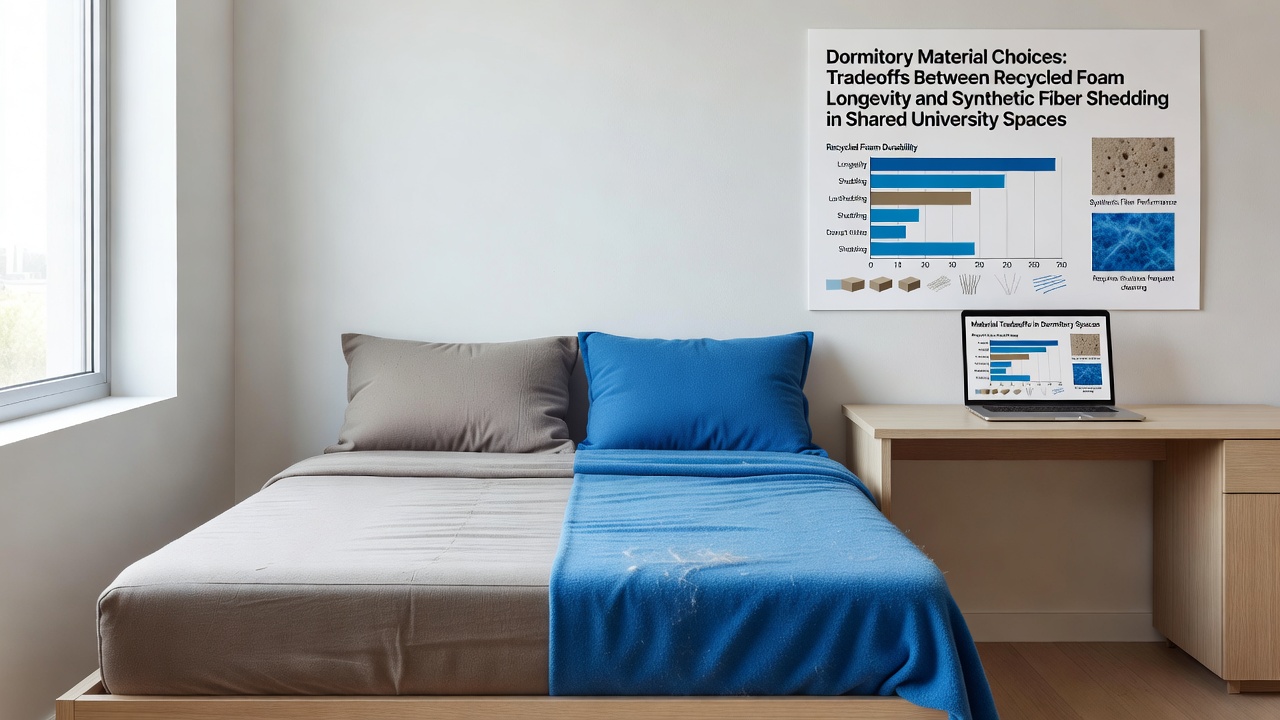
University housing departments across multiple regions continue to evaluate material options for mattresses, pillows, and upholstery in shared dormitory environments where durability under frequent use intersects with concerns over fiber release during regular cleaning cycles, and data from campus maintenance records indicate that recycled foam components often demonstrate extended service life compared to alternatives while synthetic fibers present measurable shedding patterns that accumulate in laundry systems and wastewater streams.
Recycled Foam Performance in High-Traffic Dorm Applications
Facilities teams at institutions in North America and Europe have documented that mattresses incorporating post-consumer recycled polyurethane foam maintain structural integrity for periods averaging six to eight years under typical student occupancy loads, whereas standard constructions reach replacement thresholds earlier due to compression set and edge breakdown, according to procurement reports compiled by university operations offices. These foam formulations draw from industrial scrap streams that undergo reprocessing to restore resilience, and tests conducted by materials laboratories show consistent load-bearing capacity across repeated compression cycles that simulate nightly use by successive residents. Observers note that procurement contracts increasingly specify recycled content percentages because such specifications align with institutional sustainability targets without requiring immediate adjustments to existing supply chains.
Replacement schedules tracked at several mid-sized campuses reveal that foam longevity directly reduces annual procurement volumes, and inventory logs from 2024 through 2025 demonstrate fewer units entering waste streams when recycled-content products occupy the majority of beds. Researchers at technical universities have measured off-gassing profiles and found that properly cured recycled foams release volatile compounds at rates comparable to virgin materials once initial airing periods conclude, allowing facilities staff to integrate them into standard turnover protocols that occur between semesters.
Shedding Patterns Associated with Synthetic Fiber Components
Pillows, mattress toppers, and quilted covers that rely on polyester or blended synthetic fills release measurable quantities of microfibers during mechanical washing, and wastewater sampling studies performed by environmental engineering departments have quantified fiber counts per kilogram of laundry processed through dormitory facilities. These fibers travel through campus plumbing networks and reach municipal treatment plants where capture rates vary depending on filtration technology installed at each site. Data compiled by research groups in Australia indicate that synthetic bedding items contribute a detectable fraction of total microfiber loads entering waterways from residential sources, prompting housing administrators to track fiber loss alongside traditional metrics such as stain resistance and thermal performance.
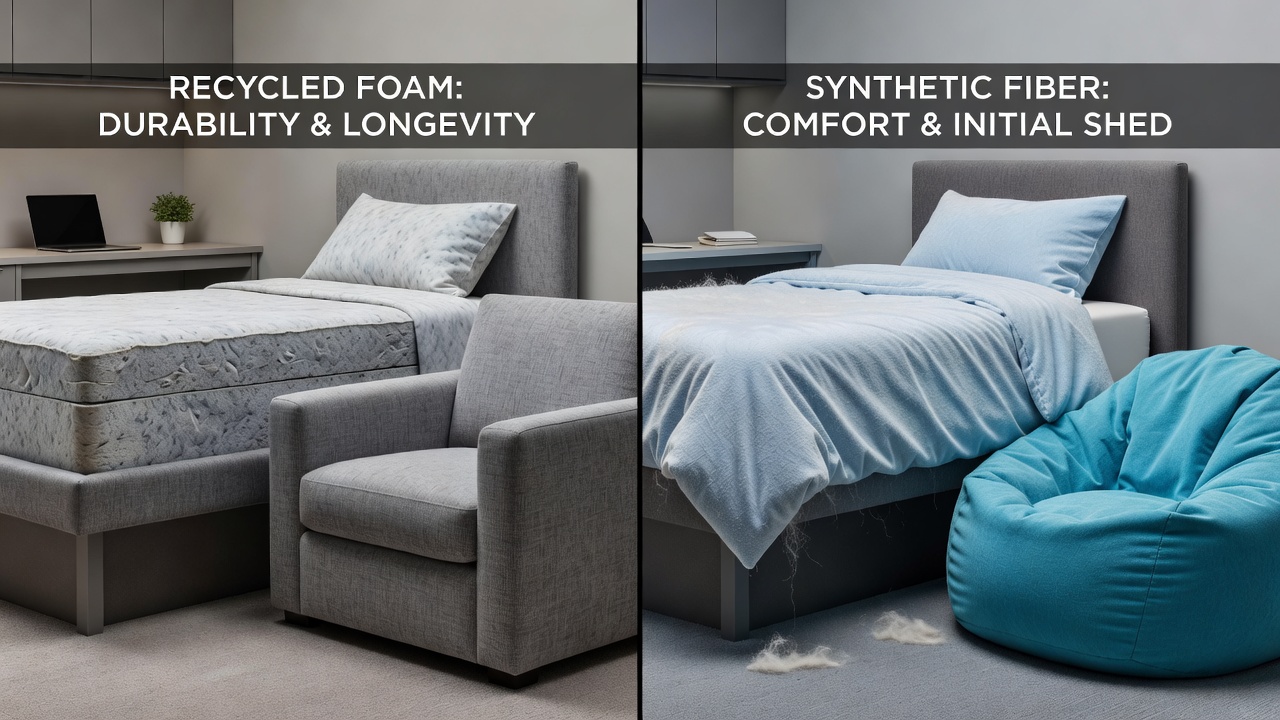
Laundry supervisors report that items containing higher percentages of synthetic fill require more frequent inspection for clumping and loss of loft, and maintenance records show earlier replacement intervals when fiber migration accelerates during high-volume washing rotations common in shared residence halls. European regulatory updates scheduled for implementation in September 2026 will introduce labeling requirements for textile products that quantify expected fiber release under standardized wash tests, giving university purchasing departments additional data points when comparing product specifications.
Integrated Approaches Observed Across Campuses
Housing directors have begun combining material selections within single room configurations, placing recycled foam cores beneath covers that incorporate limited synthetic content or alternative natural fiber blends to moderate overall shedding while preserving service life. Procurement analyses from Canadian institutions document that hybrid specifications have lowered both replacement frequency and fiber discharge measurements in pilot buildings, and results from these trials appear in facilities management presentations shared among peer universities. Such combinations require careful evaluation of seam construction and cover fabrics because stitching patterns influence how readily inner fills escape during agitation.
Student feedback collected through anonymous surveys at participating campuses indicates awareness of material differences primarily through changes in room turnover procedures rather than direct sensory distinctions, and facilities staff continue to monitor both performance indicators and waste volumes as new product lines enter rotation. Government agencies in multiple jurisdictions have published guidance documents that outline testing protocols for both durability and emission characteristics, allowing institutions to align purchasing decisions with forthcoming compliance frameworks.
Conclusion
Material selection processes in university dormitories now incorporate quantitative assessments of both service duration and fiber release characteristics, and records maintained by operations departments demonstrate measurable differences between recycled foam longevity profiles and synthetic fiber shedding rates under real-world occupancy conditions. Continued monitoring through 2026 and beyond will provide additional datasets as regulatory requirements evolve and new product formulations reach the market.