Ulrich Hayes · 2 October 2026
University Housing Adapts Bedding Strategies to Balance Microplastic Reduction with Shift Worker Comfort Needs
University housing departments have begun revising their bedding procurement policies as concerns over microplastic shedding from synthetic materials intersect with the specific rest requirements of shift-working students and staff, and these changes reflect broader data on textile pollution that continues to accumulate in wastewater systems across campuses.
Identifying the Core Tradeoffs
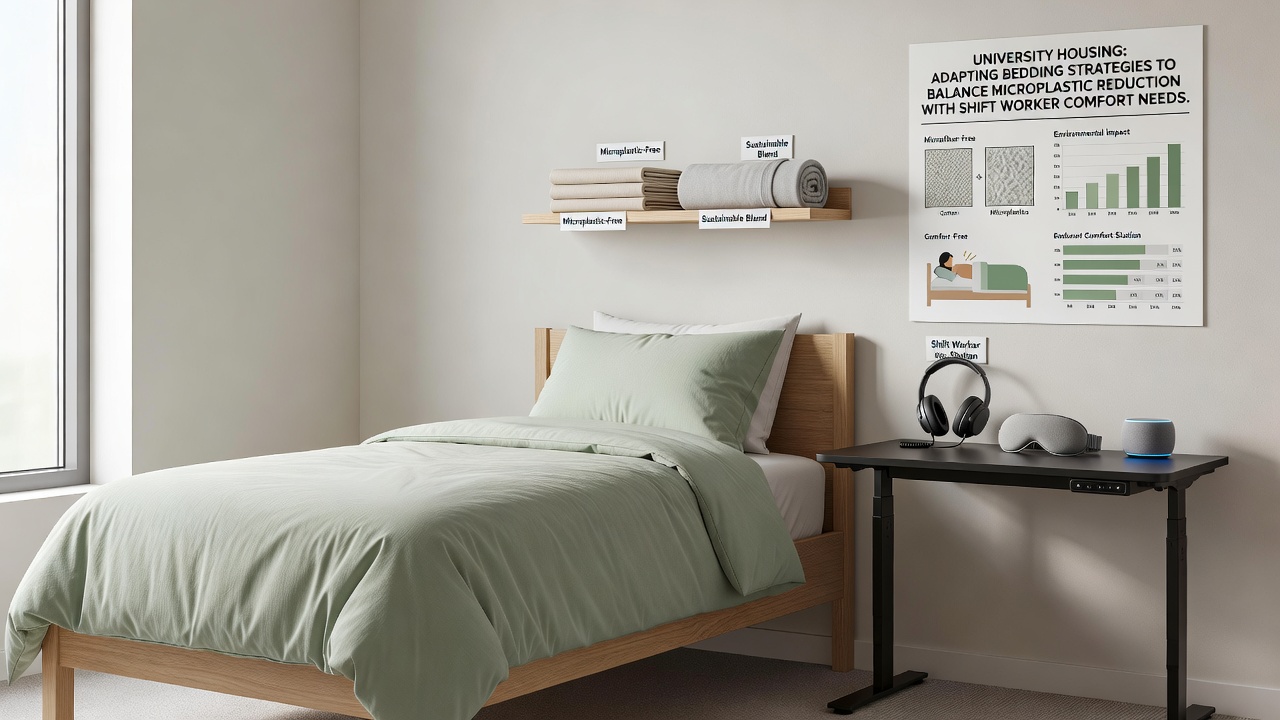
Studies from multiple institutions indicate that polyester and other synthetic fills release substantial quantities of microfibers during laundering cycles, while natural alternatives such as organic cotton or wool often provide different thermal regulation profiles that some shift workers report as less consistent during irregular sleep windows, and housing coordinators now weigh these factors when selecting new inventory for residence halls that accommodate both traditional undergraduates and night-shift employees in medical or security roles.
October 2026 marks the scheduled rollout of updated EU textile standards that tighten allowable microfiber release thresholds, prompting several North American universities to align their purchasing ahead of potential supply chain adjustments, and procurement teams have started pilot programs that test hybrid mattress toppers combining minimal synthetic layers with denser natural barriers to limit fiber escape without sacrificing pressure relief for those who rotate between day and overnight duties.
Implementation Across Campuses
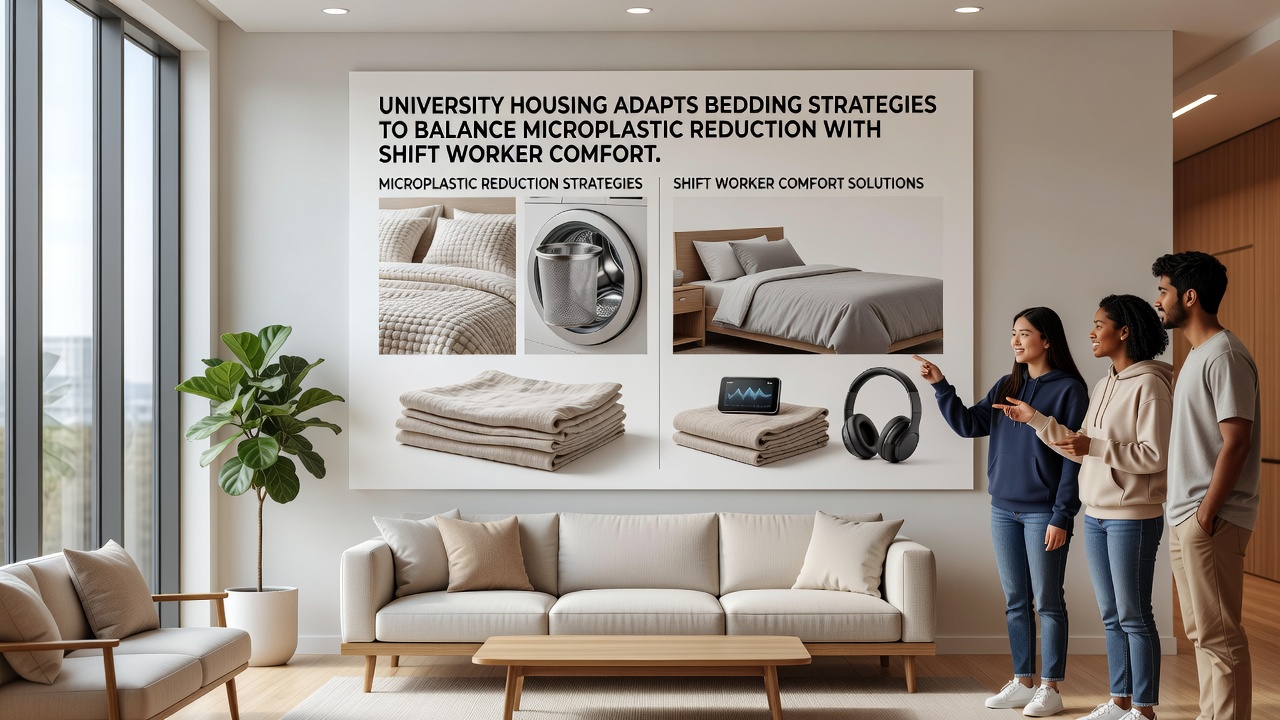
Facilities managers at larger universities have introduced modular bedding systems that allow residents to swap top layers based on seasonal needs and work schedules, and these systems incorporate washable encasements designed to trap loose fibers before they reach campus laundry facilities, according to reports compiled by the European Environment Agency on textile pollution pathways.
Shift workers in particular benefit from bedding that maintains consistent loft after repeated compressions, yet many synthetic options that deliver this durability also contribute disproportionately to microplastic loads, and universities have responded by trialing latex cores paired with organic cotton covers that reduce shedding while preserving support for bodies accustomed to fragmented rest periods.
Data Driving the Adjustments
Laundry effluent testing at several large public universities has shown that switching even 30 percent of bedding stock to lower-shed materials can cut microfiber output by measurable percentages over a single academic year, and housing offices have begun tracking resident feedback through anonymous surveys that separate responses by work schedule to ensure comfort metrics remain stable for night-shift cohorts.
Researchers note that wool batting offers natural antimicrobial properties and moisture management that can help regulate temperature during daytime sleep, whereas some synthetic foams retain heat in ways that complicate recovery for workers returning from long night shifts, and these observations have guided the selection of layered systems rather than single-material solutions in updated residence hall specifications.
Operational Considerations for Housing Teams
Inventory rotation schedules now include more frequent inspections of encasement integrity because damaged barriers allow fibers to escape regardless of base material, and maintenance crews coordinate with environmental health departments to monitor wastewater indicators that reflect the effectiveness of the new bedding protocols.
Supply contracts increasingly specify third-party certifications for both microfiber retention and durability under high-use conditions, and universities have started sharing specification templates through regional consortia so that smaller institutions can adopt similar standards without developing them independently, and this collaboration has accelerated the availability of compliant products that meet both environmental and ergonomic benchmarks.
Conclusion
University housing adaptations continue to evolve as new measurement tools and material options become available, and the balance between microplastic reduction targets and shift worker comfort remains an active area of adjustment rather than a fixed endpoint, with ongoing data collection informing refinements to procurement and maintenance practices across multiple regions.